
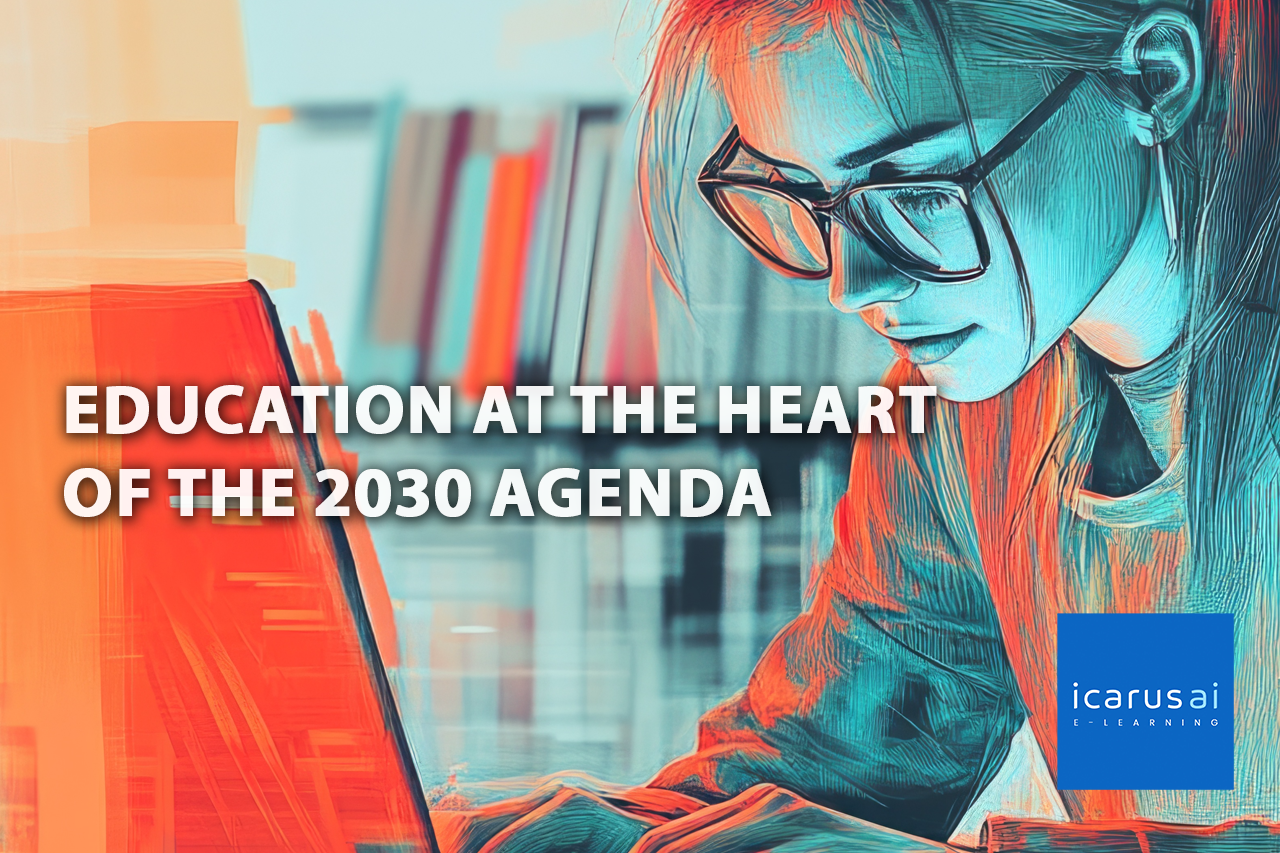
Why SDG 4 is becoming one of the most important foundations for human capability, resilience, and long-term progress
The future of education is no longer a sectoral conversation.
It is a development conversation.
- An institutional conversation.
- A workforce conversation.
- A human dignity conversation.
That is why Sustainable Development Goal 4 matters so deeply.
SDG 4 calls on the world to ensure inclusive and equitable quality education and promote lifelong learning opportunities for all by 2030. UNESCO presents this goal as central to wider sustainable development, with education acting as a force that supports inclusion, opportunity, social cohesion, and long-term resilience.
This matters because education shapes far more than academic outcomes.
- It influences whether people can adapt to technological change.
- It affects whether workers can move with confidence through changing labor markets.
- It determines whether communities can participate meaningfully in civic, economic, and digital life.
And it helps define whether the future becomes more equitable or more fragmented.
As the 2030 horizon approaches, education is becoming one of the clearest forms of future infrastructure.
Countries, institutions, and organizations that invest seriously in learning are investing in more than classrooms. They are investing in human capability. They are investing in the ability of people to contribute, evolve, and participate with greater confidence and agency in a fast-changing world. UNESCO’s SDG 4 framework places strong emphasis on access, inclusion, equity, quality, and lifelong learning precisely because these are not peripheral concerns. They are foundational ones.
This is especially important now.
The world is being reshaped by artificial intelligence, automation, demographic change, and rising pressure on institutions to remain both effective and socially relevant. In such a context, education is becoming a strategic lever for resilience. It helps people build knowledge, but also adaptability. It expands opportunity, but also judgment. It supports employability, but also participation and dignity.
That is why the future of education must be approached with greater seriousness.
Quality matters.
Inclusion matters.
Lifelong learning matters.
Relevance matters.
And implementation matters.
Global commitments are important, but progress depends on whether institutions translate those commitments into practical systems that strengthen real human capability. The closer we move toward 2030, the more visible this becomes.
At ICARUS, we see education as one of the strongest foundations for the future.
A strong educational ecosystem can support social mobility, improve workforce readiness, widen access to knowledge, and help people navigate complexity with more confidence. It can prepare individuals not only to respond to change, but to shape it responsibly.
This is why education deserves to sit closer to the center of strategic thinking.
Because SDG 4 is not only about schooling. It is about the conditions under which people and societies can move forward well.
The institutions that understand this early will do more than improve outcomes. They will help define what meaningful progress looks like by 2030.