
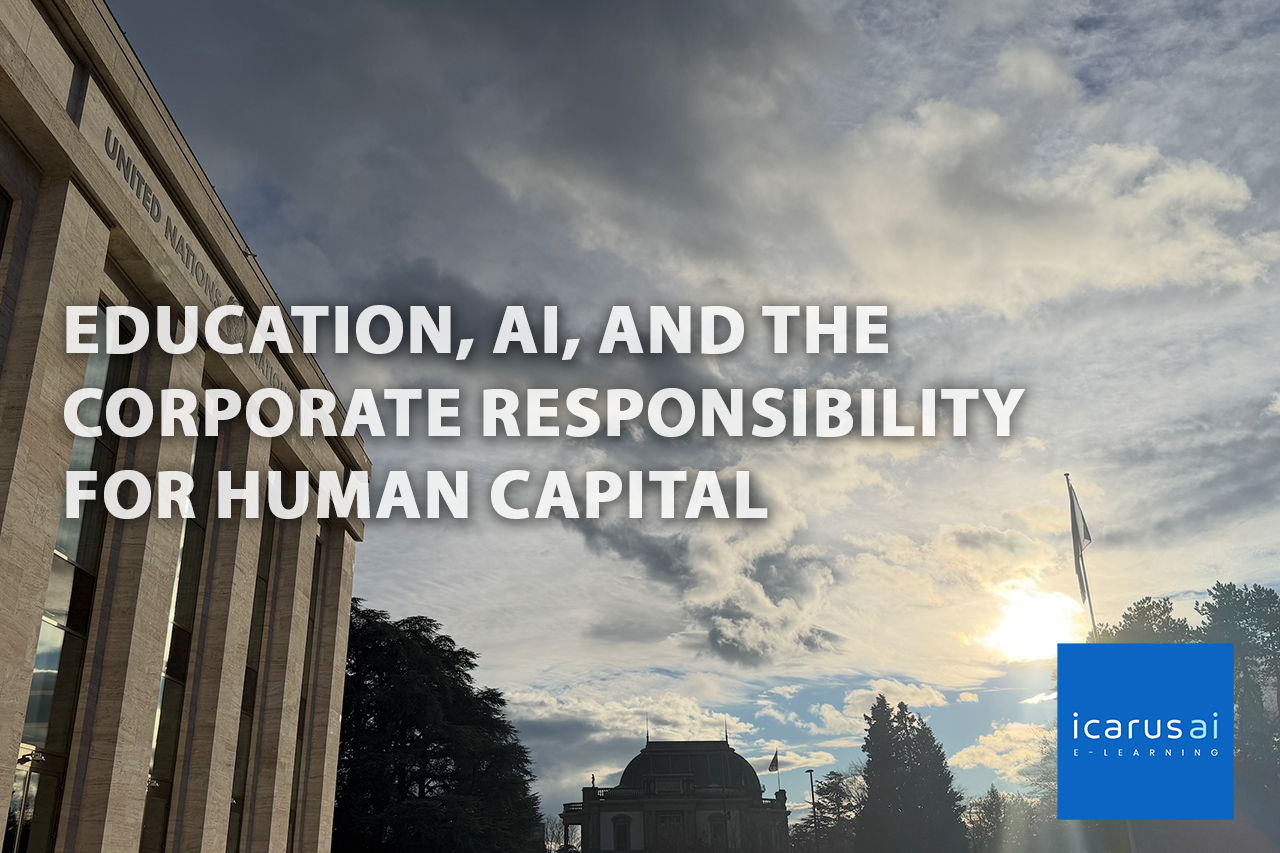
Opinion Statement at the 14th United Nations Forum on Business and Human Rights, Geneva, November 2025
My participation in this Forum, particularly on the intersection of Technology, AI, and Human Rights, stems from a conviction hardened by two decades in the EdTech sector: that education is the most vital, foundational human right, and the most sustainable investment. It is the indispensable means of realizing other rights, lifting marginalized groups out of poverty, and promoting peace and development.
The UN Guiding Principles on Business and Human Rights (UNGPs) compel businesses to address the impact of their activities. When we discuss AI, this duty must be expanded to recognize the corporate responsibility to actively enable education, not just avoid its infringement.
Education: The Engine of Future Prosperity and Peace
Education, firmly rooted in the Universal Declaration of Human Rights, is the key that allows many other Sustainable Development Goals (SDGs) to be achieved.
- Economic Empowerment: It is the most powerful tool for reducing poverty, increasing productivity, and providing the problem-solving and critical thinking skills essential for innovation in a modern society. Literate populations are more productive, and an educated person breaks the cycle of poverty by securing better-paying jobs.
- Societal Resilience: Education promotes democracy, peace, tolerance, and contributes to the full development of the human personality. It is a vital investment to promote justice and inclusive institutions.

The Corporate and AI Mandate
The digital revolution presents a historic opportunity, but it is marred by the expanding digital divide. Business, particularly the technology sector, must adhere to the corporate responsibility to respect human rights.
As an AI Strategist and founder of an AI-enabled e-learning platform, I urge this Forum to focus on the following two actions under the “Smart Mix of Measures“:
- Human Rights Due Diligence on AI Access: Companies must perform due diligence not just on how their technology harms, but on how their deployment choices—or lack thereof—hinder access to quality education. We must prevent AI from becoming a gatekeeper that rejects the imperfect and instead use it to deliver affordable, high-quality, and equitable educational programs globally.
- Strategic Investment in Human Capital: The most responsible business conduct in the 21st century is to invest in education infrastructure and accessibility. This is not philanthropy; it is a vital investment in the future workforce and the stability of the markets in which businesses operate.
We must ensure that the deployment of AI is a force for inclusion, guaranteeing that every individual, regardless of their background, has the opportunity for personal development. Protecting the right to education is the ultimate way to promote peace and secure shared prosperity worldwide.